
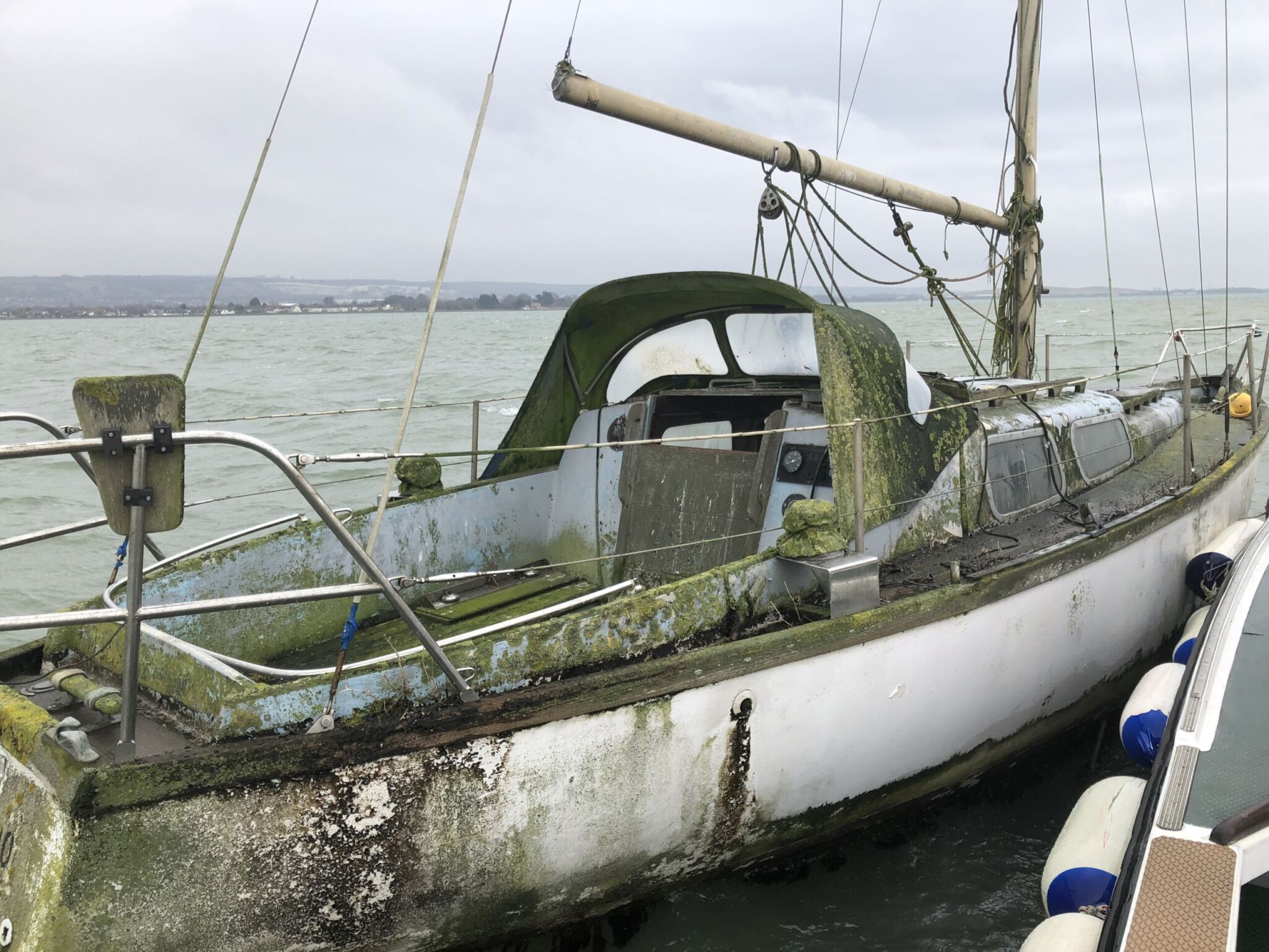
 I got a call one day from a guy who said:
“Steve, I’ve got a boat I want to sell.” Now that’s not unusual — that’s basically my life. So I asked the usual questions.
“Where is it?”
He said: “Portsmouth Harbour.”
Good start I said, “Great — can you send me some photos?” There was a pause. Then he said:
“I don’t actually have any recent ones…”
That’s when you start to get a feeling. So I asked: “Okay… when did you last see the boat?”
He said: “About five years ago.”
Now at this point, most people would be concerned. But in my world, this is where things start getting interesting. So I went to have a look. They I called him and said: “Good news… the boat is still there.”

Which is always a positive in this line of work. Then I said: “Bad news… it appears to have new occupants.”
Turns out, over the last five years, the boat had been… let’s call it… sublet, to seagulls. Not one or two, an entire family operation. The cockpit had basically become a wildlife reserve. The canvas was… let’s say… well used. And the cabin had that very particular smell that only comes from: salt air, time and poor life decisions. So I took some pictures and called the owner back and I said: “Right, I’ve got an update for you.”
And he goes: “Is it bad?”
I said: “Well… the boat is still there but it’s no longer your biggest fan.”
And here’s the interesting bit. He didn’t panic. He didn’t ask about repairs. He didn’t ask about value.
He just said: “Can you get rid of it?”
That’s the moment. That’s the exact moment the boat market begins. Because five years earlier, that boat was a dream. Solent sunsets, family holidays and long weekends. Now it’s a problem with feathers and that’s what I’ve learned doing this.
Boats don’t get sold because there’s something wrong with them. They get sold because life moved on, and sometimes… life moves on so much… that even the seagulls move in, and that’s when people like me get a phone call.